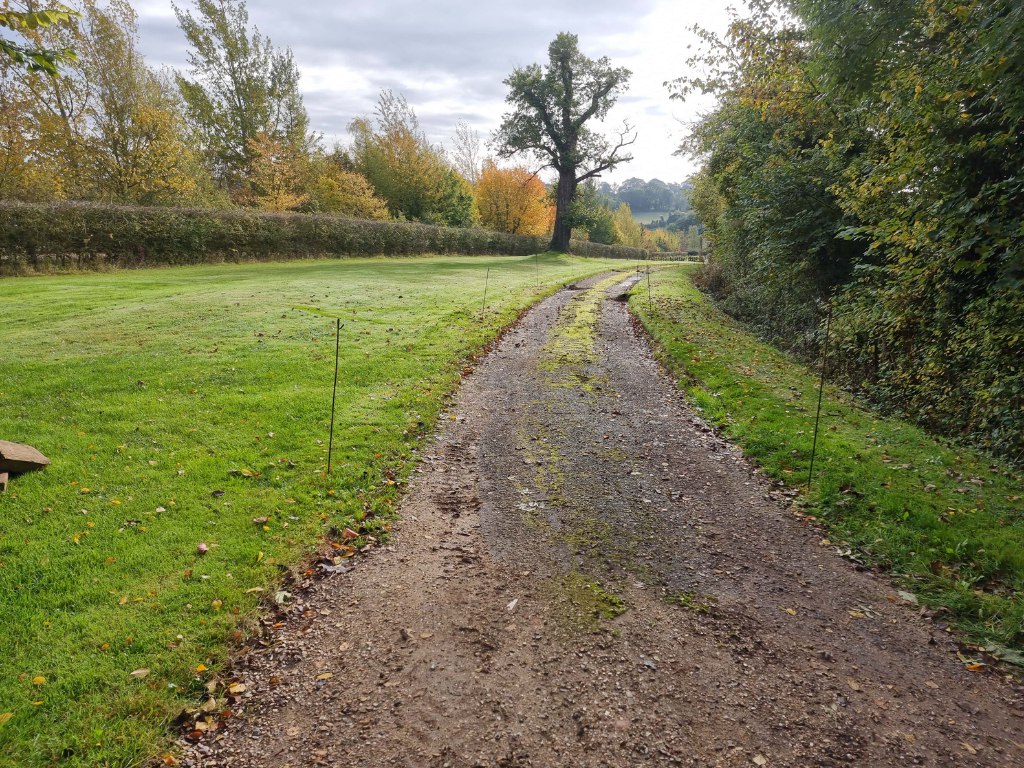
Can a Small Sunken Area Cause Problems Across the Rest of the Driveway?
A small depression in a driveway can be easy to overlook, particularly when the remainder of the surface still appears level and usable. However, localised sinking can sometimes be an early indication that the supporting materials beneath the surface have moved, weakened or settled unevenly. If the underlying cause continues, deterioration may gradually affect the surrounding driveway.
For property owners in Saffron Walden, Essex, noticing a sunken area early provides an opportunity to investigate why it has developed. The important consideration is not simply the size of the depression but whether it is stable, collecting water or beginning to affect neighbouring sections of the surface.
How Can Localised Driveway Sinking Affect a Wider Area?
A driveway depends on more than its visible surface. The layers beneath need to provide consistent support so that vehicle loads are distributed effectively and the finished surface remains stable.
When one area begins to sink, the surface may no longer be supported evenly. This can create additional stress around the edges of the depression, encourage water to collect and potentially contribute to cracking or movement nearby.
A small sunken section does not automatically mean the entire driveway has a problem, but understanding why it has developed is important.
What Causes a Driveway to Sink?
Localised sinking can develop when the supporting ground or construction beneath part of the driveway no longer provides the same level of support as surrounding areas.
This may result from localised settlement, weakened supporting material, water-related deterioration or inadequate preparation within a particular section.
The visible depression is therefore often a symptom rather than the complete problem. Simply restoring the surface level without considering what lies beneath may allow the same issue to return.
Small Depressions Can Collect Rainwater
One of the first consequences of sinking is often standing water.
A properly formed driveway should manage rainfall through suitable levels and drainage. Once part of the surface drops, water can begin collecting within the depression rather than following its intended route.
Repeated saturation can place additional pressure on an already vulnerable area, particularly where cracks or open joints provide routes towards the supporting layers.
Water Can Affect the Edges of the Sunken Area
The centre of a depression is not necessarily the only part requiring attention.
As water repeatedly collects, the transition between the sunken and stable sections may become increasingly vulnerable. Depending on the surface type and underlying construction, moisture can reach beneath neighbouring areas and contribute to further instability.
This is one reason a small defect can sometimes become progressively larger rather than remaining confined to its original dimensions.
Vehicle Loads Can Increase Movement
Driveways regularly support concentrated loads from vehicles.
When a surface is evenly supported, those loads can be managed effectively by the complete construction. If one section has lost support, vehicle movements across the area can place additional stress on the weakened surface and its edges.
Repeated loading can gradually worsen an existing depression, particularly when the underlying cause has not been corrected.
Cracking Can Develop Around a Depression
Changes in level can create stress within adjoining driveway surfaces.
Where one area moves while the neighbouring section remains stable, cracks can develop around the boundary between them. These openings may then provide additional routes for water to penetrate beneath the surface.
A sunken area accompanied by cracking therefore deserves closer investigation than a minor surface variation that has remained unchanged.
The Type of Driveway Surface Makes a Difference
Different driveway materials can respond to localised settlement in different ways.
A continuous surface may develop cracks or deformation as the supporting layers move. Individually laid paving units may sink or become uneven within the affected section.
Regardless of the surface material, the principle remains similar: if the foundation beneath part of the driveway is unstable, repairing only the visible finish may not provide a dependable solution.
Sunken Areas Near Driveway Edges Need Attention
The edges of a driveway can be particularly important because they help define and support the surfaced area.
If sinking develops near an inadequately supported edge, neighbouring material may begin moving outwards or breaking away. Vehicles travelling close to the perimeter can place further pressure on the affected section.
In these circumstances, both the depression and the condition of the surrounding edge should be considered during assessment.
Drainage Problems Can Be Both a Cause and a Result
Localised sinking and poor drainage can sometimes reinforce one another.
Water movement may contribute to deterioration beneath a section of driveway, leading to settlement. Once the surface sinks, the resulting depression can collect even more rainfall, increasing exposure to moisture.
Correcting this type of problem effectively requires consideration of both surface levels and how water behaves around the affected area.
Look for Changes in the Size of the Depression
A small sunken area that has remained stable presents a different situation from one that is gradually becoming deeper or wider.
Changes over time can indicate that movement beneath the surface is continuing. New cracks, increasing water retention or neighbouring sections beginning to change level are also useful warning signs.
Monitoring these developments can help establish whether the problem is truly isolated.
Several Sunken Areas Can Indicate a Wider Issue
One depression may result from a localised weakness. Multiple depressions appearing across a driveway require a broader assessment.
Where several sections are changing level, the issue may involve more extensive problems within the supporting construction rather than one isolated point.
In this situation, repeatedly correcting individual depressions without considering the complete driveway may not provide consistent long-term performance.
Can a Small Sunken Area Be Repaired Locally?
Yes, localised repair may be entirely appropriate where the problem has a clearly defined boundary and the surrounding driveway remains stable.
The affected surface can be addressed while serviceable areas remain undisturbed. However, the supporting materials beneath the depression should be considered so that the repair is formed on a stable foundation.
The objective should be to correct both the level and the reason it changed where this can be identified.
Why Simply Filling the Depression May Not Work
Adding material to the top of a sunken section may make the surface appear level again, but it does not necessarily restore the support beneath it.
If the underlying area continues settling, the additional material may move with it and the depression can reappear. Differences between the repaired and surrounding surfaces may also develop.
A more dependable repair starts by establishing whether the construction beneath the affected area requires attention.
When Might a Larger Section Need Repair?
Sometimes inspection shows that the visibly sunken area is only part of a larger weakened section.
If surrounding material has cracked, become loose or started moving, repairing a slightly wider area may allow unstable construction to be removed and properly reinstated.
This does not mean unnecessarily disturbing sound parts of the driveway. The repair area should reflect the actual extent of deterioration.
Early Investigation Can Help Limit Further Damage
One advantage of dealing with localised sinking promptly is that neighbouring areas may still be completely serviceable.
If the underlying weakness is identified and corrected before movement or water-related deterioration spreads, the work can potentially remain confined to a relatively defined section.
Waiting until cracking, standing water and settlement become more extensive can make it harder to distinguish the original problem from the damage that developed afterwards.
Why Professional Assessment Adds Value
A depression visible at the surface does not always reveal what has happened underneath.
At Saffron Walden Driveways, we consider the sunken area alongside the surrounding surface, driveway levels, drainage and signs of movement. This helps determine whether the defect is genuinely localised or whether a wider section requires attention.
For driveways in Saffron Walden, Essex, identifying the cause before deciding on the repair helps ensure that work is proportionate to the actual condition of the surface.
Protecting the Rest of the Driveway
The purpose of addressing a small sunken area is not only to improve that particular section.
Correcting localised instability can help preserve neighbouring surfaces by restoring consistent support and reducing places where water can collect. It can also prevent vehicle movements from repeatedly placing stress on weakened edges.
This makes early assessment particularly worthwhile when most of the driveway remains in good condition.
Conclusion
A small sunken area can potentially cause problems across a larger part of a driveway if the underlying weakness continues to develop. Standing water, repeated vehicle loads and uneven support can contribute to cracking, further settlement and deterioration around the original depression.
However, a small amount of sinking does not automatically mean the whole driveway requires extensive work. Where the defect is genuinely localised, an appropriately planned repair can address the affected section while retaining sound surrounding surfaces.
If you have noticed a sunken or uneven area on your driveway in Saffron Walden, Essex, contact Saffron Walden Driveways. We can assess the affected section, investigate signs of underlying movement and recommend an appropriate repair based on the condition of your driveway.
Call us on: 01799 610 981
Click here to find out more about Saffron Walden Driveways
Click here to complete our contact form and see how we can help with your driveway needs.